The Disappearing Boss
I write about how to empower your teams with customer centred processes, so you can build your unique and amazing businesses into a system that runs smoothly - even when you’re not there. If you want a business that grows with less stress, delivers consistently great customer experiences, and gives you the freedom to take time out whenever you want, for as long as you want, or stay while you scale without killing yourself — you're in the right place.
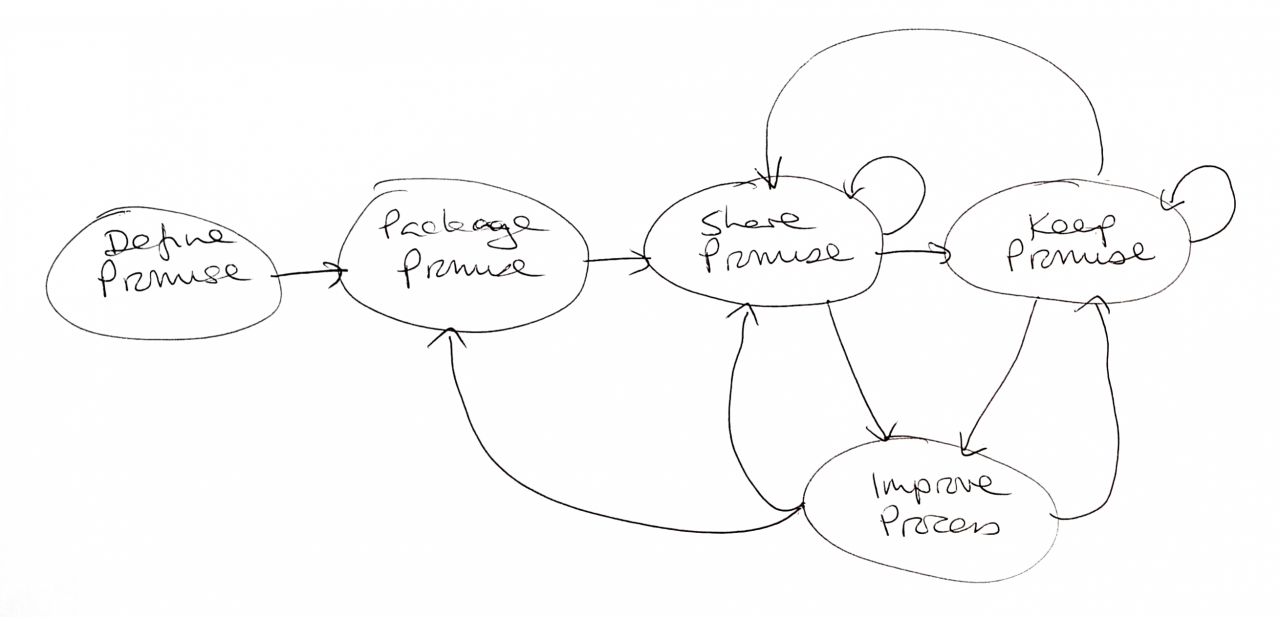
Issue 2 - on what a business really is: a system for making and keeping promisesThere's more than one way to disappear. The obvious way is to take yourself out of the picture. The less obvious solution is to blend in. Not by matching yourself to the background, but by making yourself indistinguishable from the others around you. What if, like Spartacus, you could enable everyone else in your team to behave as if they were you, the original? If everyone in your business behaved the same way as you, you would no longer stand out. In fact you'd no longer even have to be there. It starts by thinking differently about what your business is. Our traditional mental models for large businesses are very 19th century - when we think of big business, we think of factories, production lines, hierarchy and bureaucracy. Those ideas obscure some much more interesting characteristics of a successful business, characteristics that small businesses like yours have in spades: A business is creativeLike many human activities, a business is a creative endeavour, a form of self-expression. As a founder, you imagine a new world, your own utopia, and try to make it happen. That new world can work exactly as you want it to, for as long as you have the resources to keep it going. The secret of success is to create a world that clients want to be part of so much that they are willing to pay more for the privilege than it costs you to provide it, leaving you with enough resources to keep it going and even to expand it. That also means creating a world that others want to be part of so much, that they are willing to take equal responsibility for building and maintaining it - even when you're not there. A business is collaborativeLike other creative endeavours (making music, making films, creating architecture) a business is collaborative. Each and every performance is a collaboration between the originator of the idea with a set of performers and enablers who interpret and deliver that idea as an concrete experience to the intended audience. Even Michelangelo and Da Vinci had a studio full of talented painters who created large parts of their works for them - as if they were them. A business is complexLike all collaborations, a business is necessarily complex. If you want to deliver a coherent and satisfying result to those who’ve bought into the promise of the world your offer, you must deploy multiple technologies and call on multiple talents from multiple disciplines, sometimes over an extended period of time. All these threads of activity need to be orchestrated somehow into a coherent whole. Successful collaboration starts with a shared description of what that experience should be. Other creative industries have developed notations for capturing that description - a musical score, a screenplay and storyboard, a set of plans. Only business owners expect their collaborators to read their mind. A business is dynamicEven something as individual as music isn’t fixed in stone once it's written down. Instruments evolve and are invented. New interpretations reflect changing tastes. New orchestral configurations are formed in response to new constraints, or the release of existing constraints. A business is no different. It must respond to new desires, new technologies, new constraints and new ways of thinking about the world if it wants to survive. What Covid-19 has shown us is that this is actually much easier than we might have thought. A business is a systemAll this simply means that a business is a system. A complex, dynamic system for creative collaboration. So far, so good. But there’s one more thing we need to arrive at a more useful model of business. ‘The system is what the system does’, and what a system actually does depends on what it’s built around, its focus. For impact, longevity and sustainability, that focus should be something that can persist through many shifts and changes in environment, implementation and interpretation. It isn’t money. In my experience, that isn't what most small businesses are interested in. What they're interested in is making promises and keeping them. Profit is merely the means by which they are enabled to keep doing that. This experience has led me to draft what I hope is a more helpful model for a business of any size. A model of a business as a system for making and keeping promises. It looks like this:
I use this model to build a shared description of the experience a business creates for its clients, and how - a Customer Experience Score if you like - that enables every person in the business to make and keep promises to clients as if they were 'The Boss'. I'm going to show you how to do it too. Thanks for reading! |

The Disappearing Boss
I write about how to empower your teams with customer centred processes, so you can build your unique and amazing businesses into a system that runs smoothly - even when you’re not there. If you want a business that grows with less stress, delivers consistently great customer experiences, and gives you the freedom to take time out whenever you want, for as long as you want, or stay while you scale without killing yourself — you're in the right place.